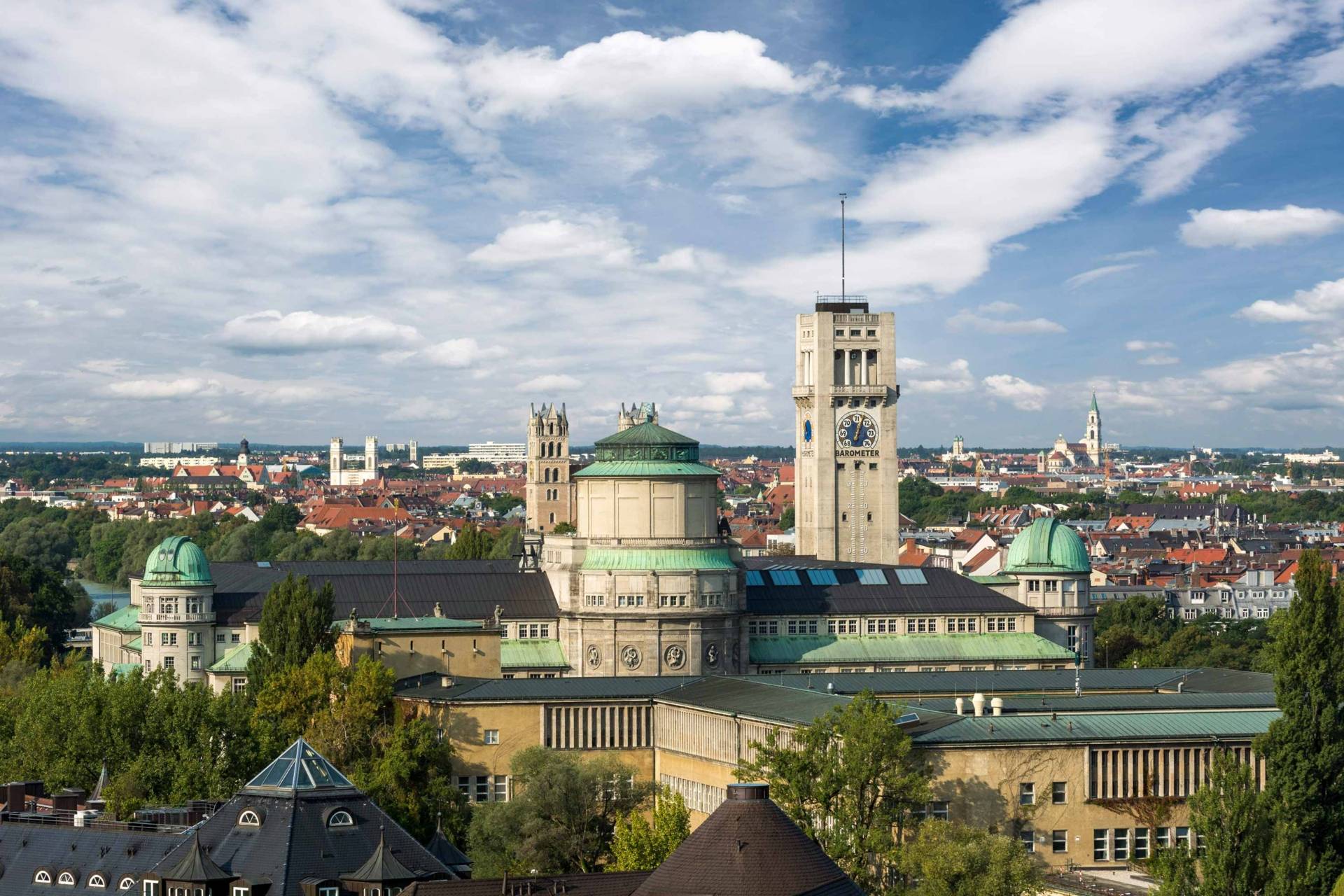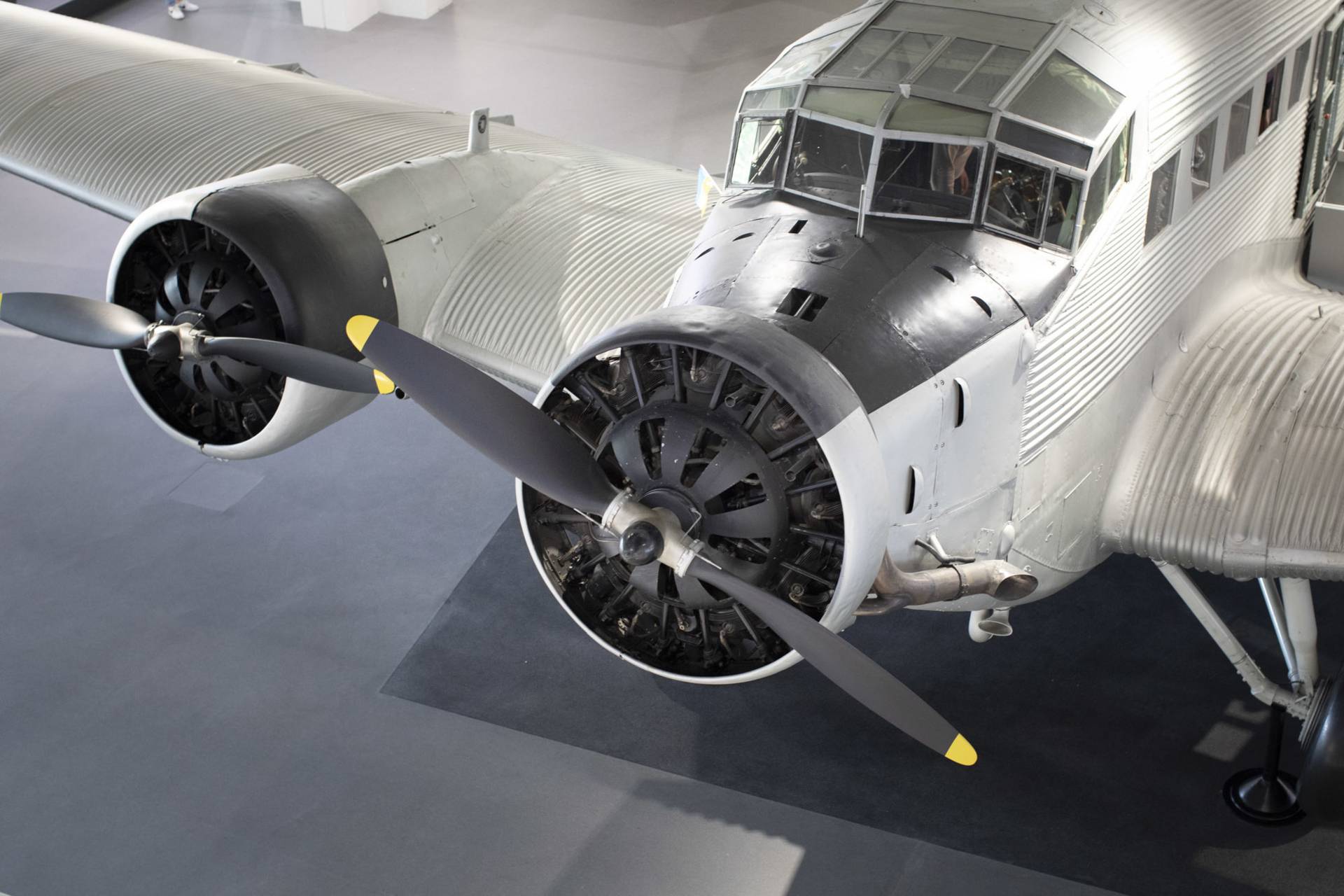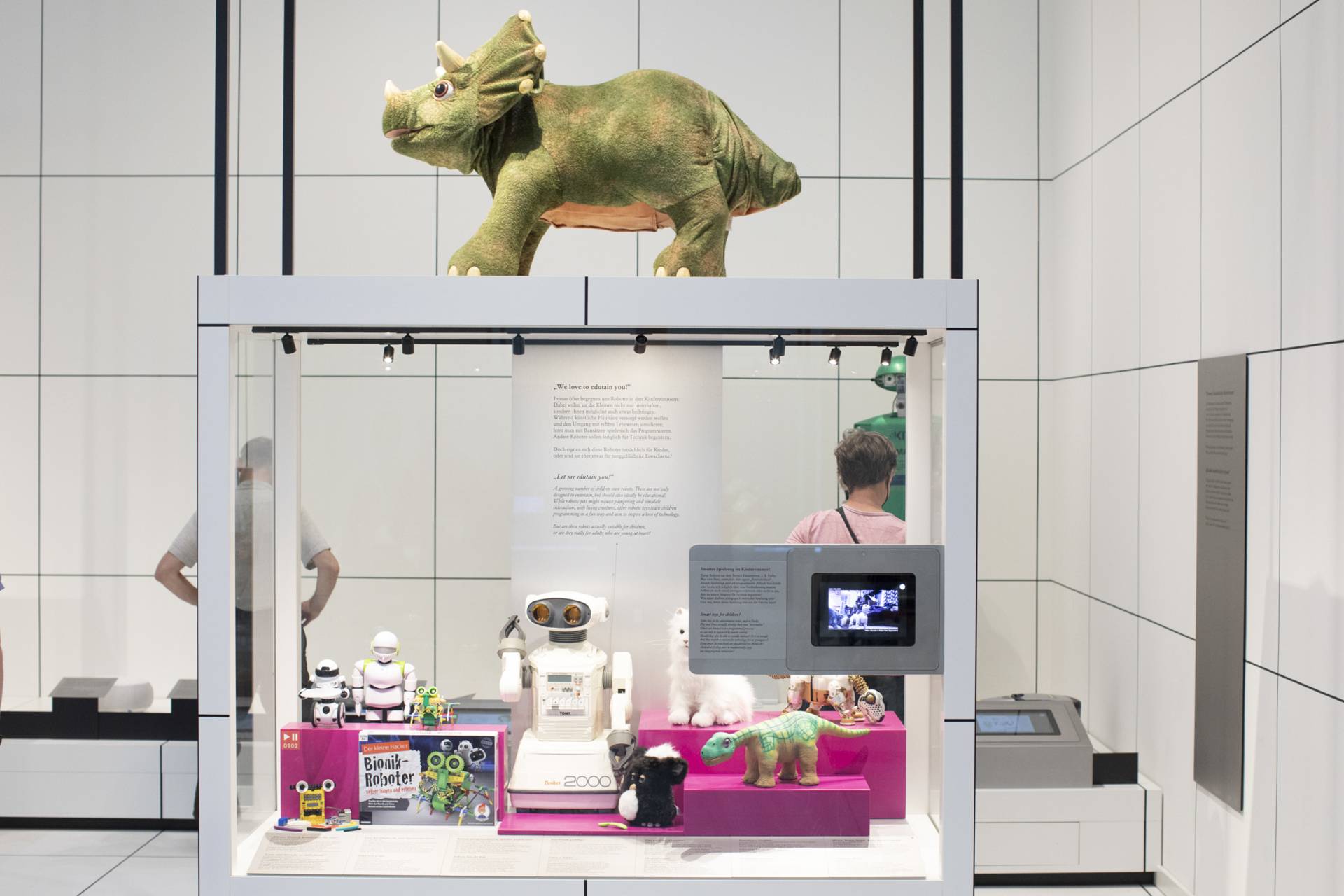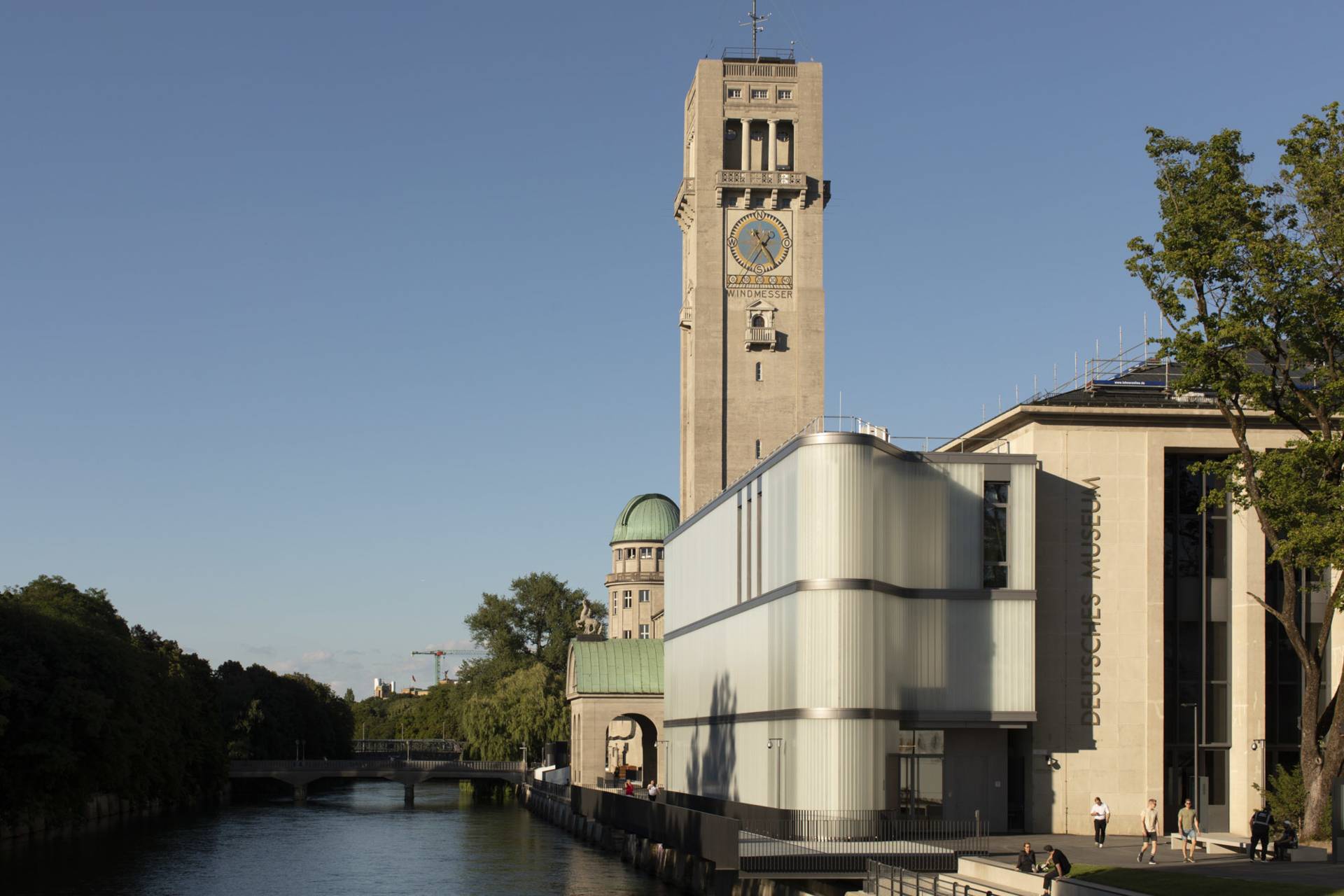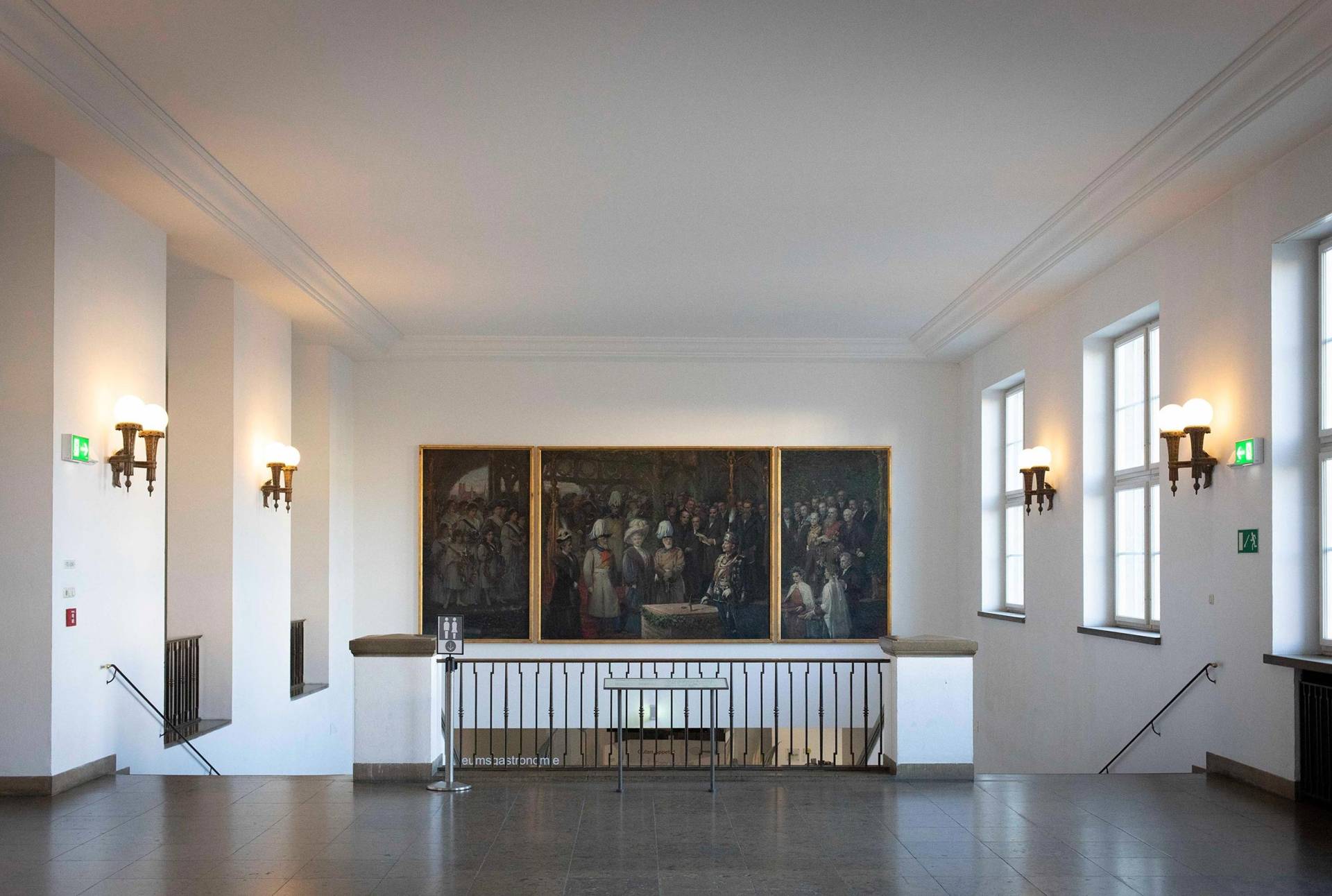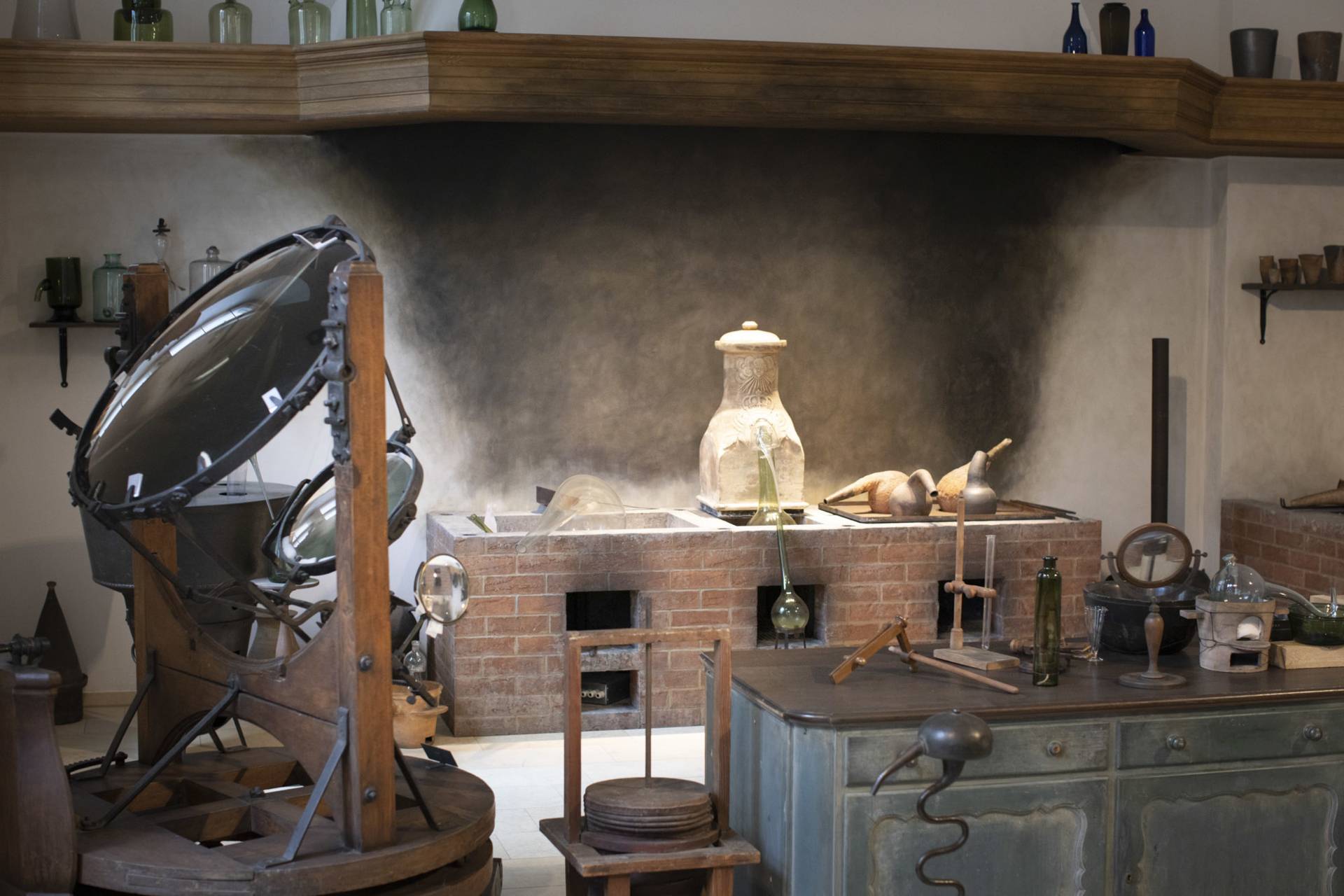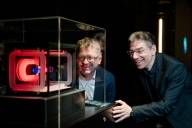
Munich is considered one of the world's top ten deep-tech hubs. Our author spoke to two people who should know best why the climate in the “Isar Valley” is so ideal for developing groundbreaking technologies – and where these innovations can be experienced and discussed: Prof. Dr Michael Decker, Director General of the Deutsches Museum, and Prof. Dr Helmut Schönenberger, CEO and co-founder of UnternehmerTUM GmbH, Europe's leading start-up centre in Munich.
I meet the two luminaries in the Future Box at the Deutsches Museum, a perfect setting for an interview on “Innovation in Munich”, as this is where the latest technologies from start-ups in Munich and Bavaria are showcased, including quantum computers, spacecraft and humanoid robots. The booth was reserved exclusively for this interview. Under normal circumstances, however, the interactive, AI-moderated exhibition experience can be booked by all museum visitors. I took part in a guided tour myself a few days ago and was so fascinated that I keep thinking back to that experience throughout the interview.
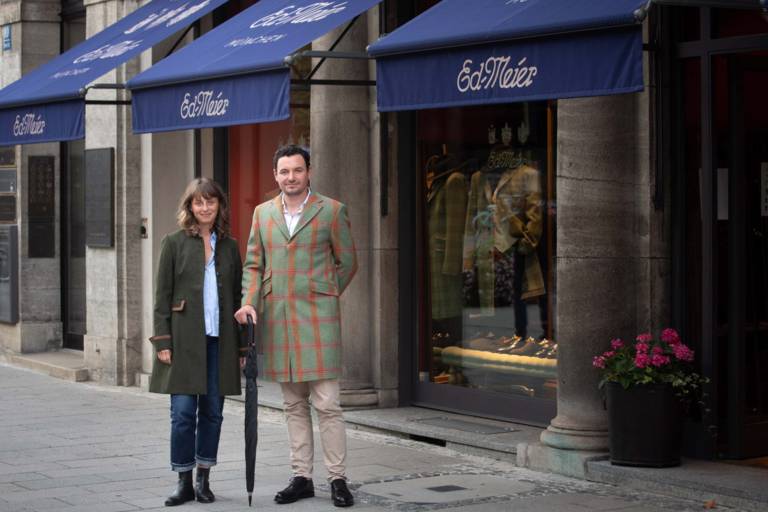
But for now, I take my seat at the “virtual campfire” in the Future Box between the two Munich professors, Michael Decker (on the right in the cover photo) and Helmut Schönenberger (on the left in the cover photo), to ask my questions about Munich as a centre of innovation.
Professor Decker, many people are curious about future technologies, but often feel overwhelmed by them at first. How do you help visitors to the Deutsches Museum overcome their initial hesitation?
Prof. Decker: In fact, many of the innovations we showcase at the Deutsches Museum are, in a sense, futures of the past. When these technologies were developed, there were corresponding needs in society – a social context from which these developments emerged. Many people are immediately drawn to the technology itself, which, of course, exerts a fascination of its own. But there are always others who approach things more through the historical context – how people lived at a certain time, what the political situation was that made a successful innovation possible. It is important to me to take these different approaches into account and to offer diverse perspectives on the technologies in the exhibition.
Even here in the Future Box, where the latest technological developments from Munich and Bavaria are presented by an AI?
Prof. Decker: Yes, highlighting different perspectives also helps people to understand new technologies, because visitors naturally arrive with very different levels of prior knowledge. Incidentally, this also applies to AI itself: Even today, I would say that most people do not really understand AI very well, even though it has been talked about in society for so long. Many might think: “Well, if everyone's been talking about it so long, I can hardly stand here now and ask what it actually is.”
But here, questions about how the latest technologies work are not only allowed – they are actually actively encouraged?
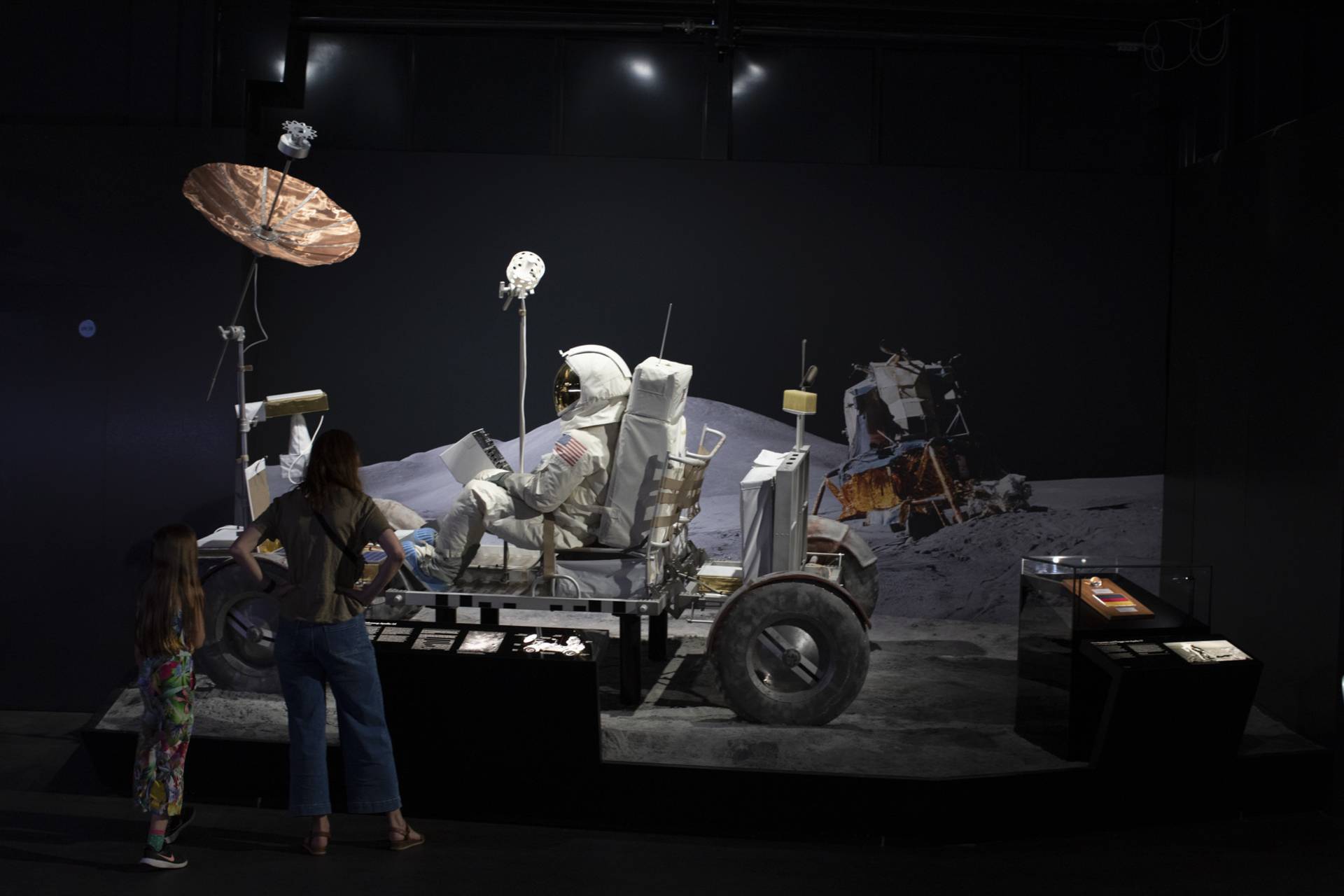
Prof. Decker: Yes, asking questions is an essential part of the Future Box exhibition concept. What's more, visitors also have the opportunity here to discuss the technologies on display and new inventions with other visitors. This includes discussions about boundaries – about where we, as humanity, perhaps shouldn't go any further. And also about the things we find truly brilliant, like the possibility of flying to the Moon soon. Just recently, the Artemis mission completed its journey around the Moon, which was very well received by the media, and we also reported on it here.
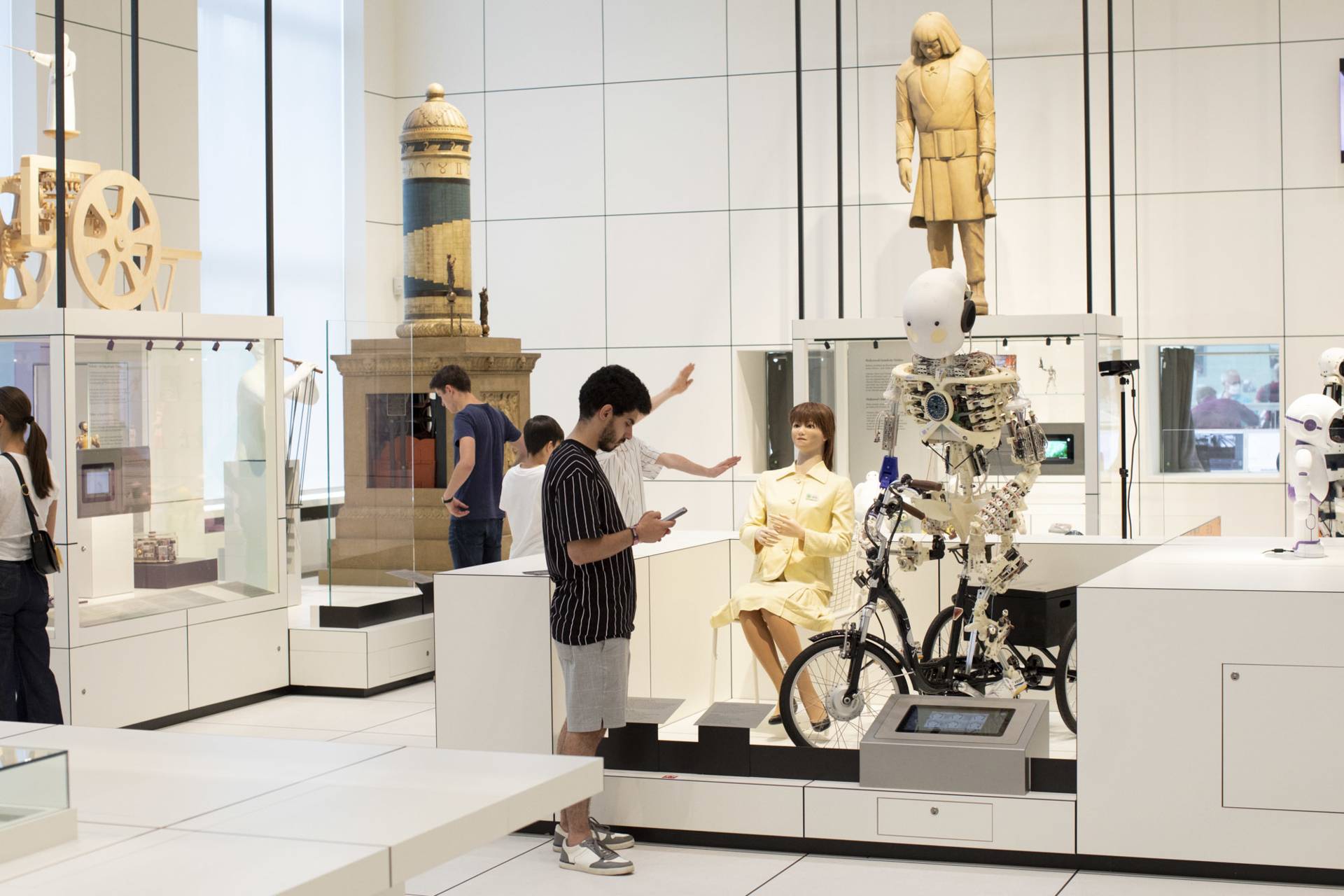
Even someone like me – definitely not a techie – gets their money's worth at the Future Box. After my visit there, I can definitely confirm this. I did not exactly shine in science at school and I suspect the same goes for most of the colourful mix of children, teenagers, parents and grandparents who joined the tour with me that day. A blue-green trail of light guides us through the darkness. We take the welcome from the friendly AI called “AI-ME” completely for granted. After her introductory speech, she leads us on to the incredibly fascinating exhibits: digital twins of human hearts that are already capable of saving the lives of newborns with heart defects; miniature stars, recreated on Earth, which are expected to provide CO2-free energy in the foreseeable future. Human-like robots learning how to iron, water flowers and care for people. The concept works: People ask one question after another. Some even pluck up the courage to take the microphone several times. The older visitors tend to enquire about the cost of a technology, whilst the youngest participants want to know how many frozen pizzas one could buy for that amount of money and whether a robot will trip over the edge of a carpet...
Professor Schönenberger, I'm sure you recognise a number of exhibits here in the Future Box that you've helped to develop. Are there any technologies among them that particularly fascinate you?
Prof. Schönenberger: The great thing about the exhibits here is that every single one of them holds incredible potential for innovation – an extraordinary ability to change the world. Take, for example, the fusion power plant from Proxima Fusion: it offers the possibility of generating energy in virtually unlimited quantities and at very low cost. We are currently in the midst of an oil crisis and that shows just how important this is. What if Germany had a source of energy that was incredibly cheap and available without restriction? That would completely change our country for the better. And that shows: Even a single exhibit in a display case here could put the Federal Republic of Germany back on a path of growth.
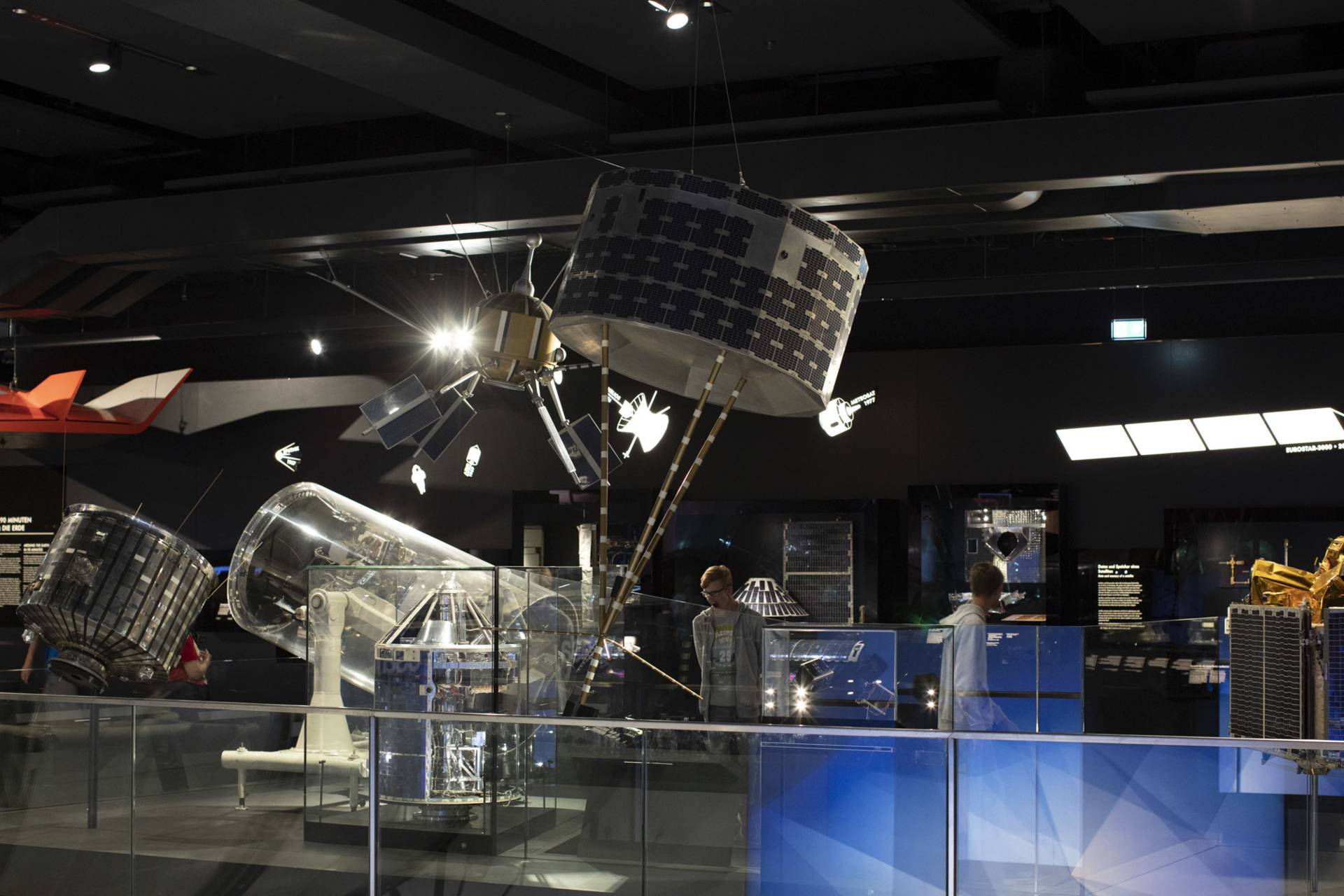
I heard earlier that you were talking to Professor Decker about the development of OroraTech's FOREST-1 satellite, which is on display in the same room.
Prof. Schönenberger: The start-up Ororatech was founded by a group of students at the Technical University of Munich (TUM). They wanted to develop a system for detecting forest fires – a technology for real-time fire detection. To do this, they built a satellite and launched it into space. The next step will be to create an entire satellite constellation capable of detecting forest fires worldwide. The exciting thing about this is: It turns out that these technological capabilities, which were originally developed for forest-fire detection, can also be used for many other technical applications beyond fire detection. This example, too, bears witness to constant progress and we as people from Munich and Bavaria, as Germans and Europeans, have the opportunity to be right at the heart of this development. That is also what makes the Deutsches Museum so special. You can see what drove previous generations and how all of this has had a positive impact on our world and our personal lives. Now it is our chance – together with today's generation and also with our children's generation – to continue along this remarkable path.
Asking questions is an essential part of the Future Box exhibition concept. What's more, visitors also have the opportunity here to discuss the technologies on display and new inventions with other visitors. This includes discussions about boundaries – about where we, as humanity, perhaps shouldn’t go any further.
You are indeed regarded as someone who plays a key role in paving the way for young people to start their own businesses – which has earned you the nickname “Mr Start-up”. Could you briefly describe what you have set up here in Munich, the idea behind it and what Munich has gained as a result – something that other places might also wish for?
Prof. Schönenberger: I co-founded UnternehmerTUM about 20 years ago. It grew out of my diploma thesis, which focused on how to empower young people to create new inventions and companies on a truly global scale. The role model was Stanford in Silicon Valley. This university in the US has been doing this extremely successfully for a very long time, and together with my team, I brought this entrepreneurial spirit – and the know-how on how to build companies – to Munich. Today, Munich is regarded as one of the ten most successful deep-tech hubs in the world.
UnternehmerTUM GmbH in Munich
UnternehmerTUM was founded in 2002 by entrepreneur Susanne Klatten in close collaboration with Prof. Dr Helmut Schönenberger and the then President of the Technical University of Munich. As a non-profit organisation, UnternehmerTUM GmbH is Europe's leading centre for start-ups and innovation, supporting more than 100 high-growth technology start-ups each year. More than 500 staff members assist with the development and financing of start-ups.
The aim is to tackle societal challenges such as climate change, the energy transition and resource scarcity through innovation. Founders are supported in bringing their ideas to life. They are assisted by experienced teams in developing their own products. At the MakerSpace, companies, start-ups and creative professionals can produce prototypes and small batches across two locations covering a total of 2,700 square metres.
Imagine I'm arriving at TUM as an excited first-year student. Where will I encounter this entrepreneurial spirit? And how do I actually get in touch with the people from UnternehmerTUM?
Prof. Schönenberger: Right on the very first day, there's a large orientation event where the 15,000 new students who join the Technical University of Munich every year all gather. It's a festival, and at this festival current students and successful founders talk about what they've actually been doing over the last five or six years. What products they've developed and what companies have emerged from them. And from day one, there's this spirit that, as a young person, you can be part of this innovation journey – and work together with others and build new products and services in a very hands-on way. Many of the exhibits you see here in the Future Box have been created by these young people. Alongside Carl von Linde and all the other great inventors represented at the Deutsches Museum, who have followed this path as well. They, too, were once young people discovering new things, courageous and ambitious enough to rediscover and reinvent the world.
The artificial intelligence known as ‘AI-ME’, which guides visitors through the Future Box, takes a critical look at us humans in its introductory speech. It says that you have invented a great deal, but you have also caused a great deal of damage. Do today's inventors pay more attention to sustainability?
Prof. Schönenberger: When something new is invented, it should make sense from an environmental, social and economic perspective. That is the definition of sustainability. And when our founders are working on new ideas, it is precisely these aspects that are taken into account. This may involve clearing up past legacies, but also inventing entirely new things, such as quantum computers. In essence, it is a completely open-ended field, and ultimately it is about reimagining the opportunities and possibilities we have to improve our lives and our environment.
“AI-ME”, our virtual host during the tour of the Future Box, takes a critical view of humanity on the one hand, but on the other hand places her faith in our spirit of research and innovation to enable us to live in harmony with our planet in the future. She welcomes any questions we ask during the tour. And if she ever gets stuck, the human Future Hosts take over. In this process, we learn quite a few things: For example, that the outer shell of the NYX space capsule is partly made of natural cork and that it is expected to dock with the ISS space station as early as 2028 to deliver supplies. And that it will not end up as space debris. Which is a good thing, because through virtual glasses we can also see the enormous amounts of waste orbiting our planet...
If you look at the biographies of inventors from the past and compare them with today's young entrepreneurs, what has changed?
Prof. Schönenberger: Today, it is much easier to set up a business, because all the support structures are in place. The Technical University of Munich, for example, has become a haven for start-ups. Students have access to all these technologies; they can build their prototypes in the MakerSpace – UnternehmerTUM's high-tech workshop – and they can test their ideas with corporate partners within the Munich network. In the past, everything was much more laborious, much smaller in scale and much slower. The challenge today is to run this race much faster. At the same time, the opportunities are far greater and so is the understanding of how to create something new – and how to roll them out and turn them into global successes.
What about the share of women? Are more and more women also finding the courage to start their own companies?
Prof. Schönenberger: Thankfully, yes – we run dedicated programmes for this purpose. Every successful female founder attracts other successful female founders, because these role models are so incredibly important. After all, we humans are especially inspired by other people. And when you see that the student who started four years ago has made it, other female students are likely to have the confidence to embark on this path themselves.
Today, it is much easier to set up a business, because all the support structures are in place. The Technical University of Munich, for example, has become a haven for start-ups.
Munich is now often referred to as the Isar Valley. Is there a special spirit of innovation here? Has the future always felt a little more at home here than elsewhere?
Prof. Decker: We've adopted a kind of role model from Stanford, but to do so, you first need an environment that makes this possible. As you could say that there has to be a certain spirit. That spirit may not exist everywhere in the same way. The combination of the two universities here in Munich – Ludwig Maximilian University of Munich (LMU) and the Technical University of Munich (TUM) – makes a decisive contribution to this. Especially with regard to the many Clusters of Excellence. Clusters of Excellence are the most competitive funding programmes in Germany when it comes to future innovation. In Munich, the two major universities are home to several Clusters of Excellence – that is, cutting-edge research projects funded under the Excellence Strategy of the federal and state governments. Some clusters are joint consortia between LMU and TUM, which underlines the strong research collaboration in Munich. In this competition for funding, knowledge transfer has meanwhile become a real evaluation criterion. In our research projects, we always have to think about how to bring the ideas we develop out into the world – into implementation, into industry, into innovation. But also how we can bring them into society.
From our perspective, the future will be promising, but it will also be highly demanding, extremely competitive and fast-paced. I hope that we can simply continue this race with joy and courage. That is my wish: that this spirit – and this sense of healthy competition – continues to thrive.
That network seems to work very well in Munich …
Prof. Decker: The networking is excellent. Nowadays, collaboration clearly takes precedence over the competitive environment of the past.
Prof. Schönenberger: Exactly, the bridge between academia and industry, which already existed in the past, really works here. The Deutsches Museum is precisely a place that tells this story. And this tradition continues to this day: the large and medium-sized companies we have here work very closely with academia and students – and in this way create something new. That is what makes it special: They are also supported by society and policymakers, who view this as something positive – as something driven by opportunities and possibilities.
Professor Decker, Professor Schönenberger, imagine a fairy fluttering into your office and granting you three wishes for the future of the projects closest to your hearts. What would you wish for?
Prof. Decker: Well, we have more than a million visitors here on the museum island, and my first wish would actually be to help restore these people’s confidence in the future, even if only a little bit. Mainly with the idea that we can shape the future ourselves. My basic intention behind the exhibitions is that you'll never fully understand the technology down to the very smallest detail – nobody leaves the exhibition saying, “Now I fully understand how fusion works” – but my second wish would be that, after visiting us, everyone can make a little better sense of these technologies, relate them to their own lives and draw something meaningful away from them. That is why we need spaces for conversation – like the Future Box. My third hope is that people keep coming back – especially young people and school classes – so that we have the opportunity to gently steer them towards this innovative way of thinking.
We have more than a million visitors here on the museum island, and my first wish would actually be to help restore these people’s confidence in the future, even if only a little bit. Mainly with the idea that we can shape the future ourselves.
Prof. Schönenberger: We are pursuing the same goal. And just a quick note on the figures here: At the TUM, one in every 250 students starts a business: This makes us the university with the highest start-up rate in Europe. If we could now inspire every 250th visitor to the Deutsches Museum to get something off the ground, we would become by far the most entrepreneurial country in the world. My wish is that we continue along this path – and in this race – with unwavering determination. From our perspective, the future will be promising, but it will also be highly demanding, extremely competitive and fast-paced. I hope that we can simply continue this race with joy and courage; then Munich, Bavaria and Germany will have enormous opportunities ahead of them. That is my wish: that this spirit – and this sense of healthy competition – continues to thrive.
Towards the end of the tour of the Future Box a few days ago, we participants gathered around the virtual campfire and discussed whether – and to what extent – robots should be used in caregiving. And let’s be honest, isn't that brilliant: people who have never met before engaging in a lively, cross-generational conversation. Whilst the older participants largely agreed that, although a robot could certainly take on all sorts of practical tasks, it should never be the one to wipe away tears, a boy of about ten spoke up: “I disagree,” he said. “Maybe robots can't do that with today’s technology, but I'm sure that at some point we’ll reach a stage where robots can learn emotions – and compassion too.” Nobody had anything to add to that. We were impressed and left the final word to that bright young mind. Perhaps he will one day become that one-in-250 visitor who helps change the world for the better in the near future.
One final question: Munich naturally attracts companies and researchers not least because of its beautiful surroundings. Do you ever head to the mountains or to one of the lakes?
Prof. Decker: Well, for me it's definitely the lakes … often Starnberger See. Especially because it's easy to get to. My hobby is rowing. And in that respect, I have excellent opportunities here. Including at the rowing regatta course in Schleissheim. In my first year here in Munich at the Deutsches Museum, I haven't really been able to make the most of it yet, but I definitely plan to. At the moment, I'm content with jogging along the Isar, as this is the liveliest place I can imagine here. I was genuinely thrilled by how vibrant the island is, even after the museum has closed.
And what about you, Prof. Schönenberger?
Prof. Schönenberger: Traditional activities: Skiing, mountain biking and mountaineering.
Then Munich is definitely the right place!
Prof. Schönenberger: Yes, exactly – after all, I'm a true-blue Munich native.
Thank you very much for the interview!
Prof. Dr Helmut Schönenberger graduated with a degree in aerospace engineering from the University of Stuttgart. In 2002, together with entrepreneur Susanne Klatten, he founded UnternehmerTUM GmbH in Munich, modelled on Stanford University in Silicon Valley. As its current CEO, he has played a key role in significantly advancing the start-up scene in Munich. Schönenberger is also Vice-President for Entrepreneurship at the Technical University of Munich.
Prof. Dr Michael Decker is a qualified physicist and has been Director General of the Deutsches Museum since June 2025. He is also Professor of Science Communication and Technology Assessment at the Technical University of Munich (TUM) and holds the Oskar von Miller Chair, which focuses on communicating scientific and technical topics to the public and assessing the societal impacts of technological developments.